
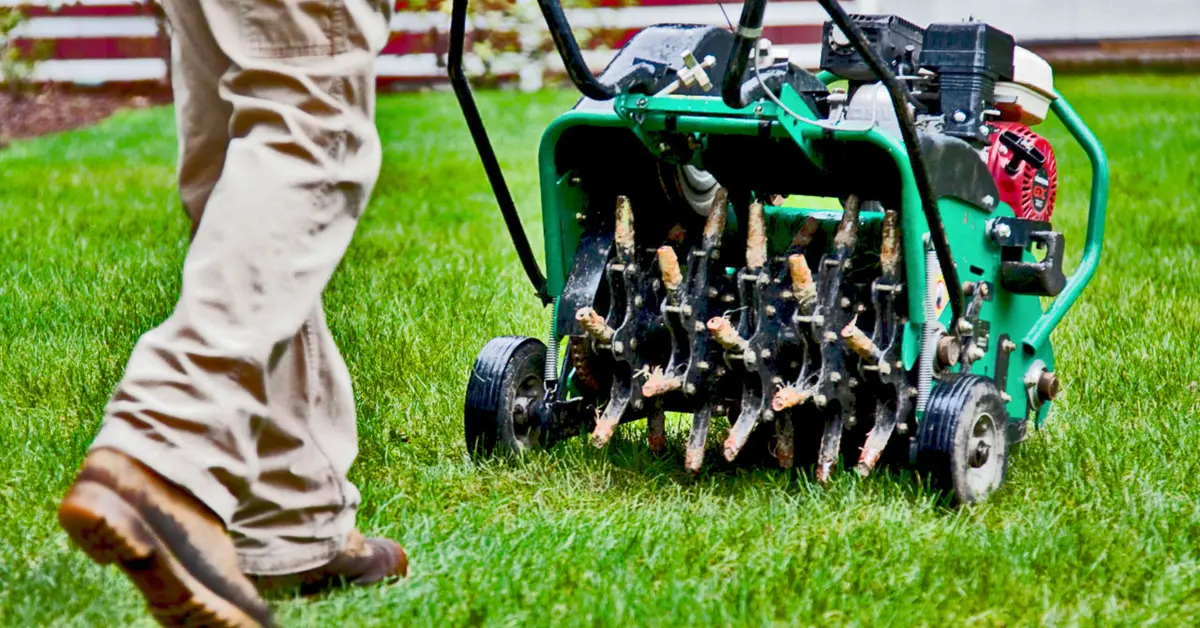
Compacted soil is one of the most common — and most overlooked — reasons lawns struggle in Birmingham. Core aeration relieves that compaction, opening channels so water, air, and nutrients can finally reach the roots where they’re needed most. The result: a thicker, healthier lawn from the ground up.
- 15+ Years in Birmingham
- 2–3″ Typical core depth
- 500+ Lawns Aerated
- 4.9★ Customer Rating
The Science of Core Aeration
How Core Aeration Transforms Your Lawn
Aeration works through a simple soil process that creates long-term improvement in turf health.
1. Cores Are Pulled
This is the actual “relief” step of aeration. We use a machine with hollow tines that physically pulls out plugs of compacted soil across the entire lawn.
- Thousands of small holes are created across the lawn
- Soil compaction is immediately reduced
- The root zone finally has space to expand and breathe
2. Plugs Break Down Naturally
After aeration, the small soil plugs left on the surface are not waste — they’re part of the improvement process.
- Plugs break down within 1–2 weeks
- Organic matter is returned to the soil
- Soil biology and microbial activity improve over time
3. Water Penetrates Deeper
One of the biggest problems in compacted lawns is that water can’t get in properly. Aeration fixes that instantly.
- Rain and irrigation soak deeper into the soil
- Less runoff and surface pooling
- Roots are encouraged to grow downward toward moisture
4. Oxygen Reaches the Root Zone
Grass roots and soil microbes both need oxygen, but compacted clay limits airflow. Aeration reopens that system.
- Restores oxygen movement through the soil
- Reactivates beneficial microbial life
- Encourages stronger, healthier root growth
5. Fertilizer Is Better Absorbed
In compacted soil, fertilizer often sits on the surface or washes away. Aeration changes how efficiently your lawn uses it.
- Nutrients reach the root zone instead of staying on top
- Less fertilizer waste from runoff
- Stronger response from existing lawn care programs
6. Turf Thickens Over Time
Aeration doesn’t just help immediately — it builds long-term improvement in how your lawn grows.
- Noticeable improvement in 3–5 weeks
- Denser, fuller turf development
- Better color and overall resilience
- Stronger results when paired with overseeding and fertilization
Key Benefits of Lawn Aeration
- Reduces runoff and water pooling – Helps water soak into the soil instead of sitting on top or running off hard, compacted areas
- Creates thicker, denser turf – Opens space for roots to spread, leading to fuller grass and fewer bare spots
- Improves drought tolerance – Deeper roots can reach moisture lower in the soil, helping the lawn survive heat and dry spells better
- Increases fertilizer efficiency – Nutrients reach the root zone instead of staying on the surface or washing away
- Reduces thatch buildup – Improves airflow and microbial activity so organic matter breaks down naturally
- Strengthens root development – Looser soil allows roots to grow deeper and stronger, improving long-term lawn health
Core Aeration vs Spike Aeration
Know the Difference
Not all aeration methods deliver real results. Only one actually fixes soil compaction.
Core Aeration (What We Use)
Hollow Tine · Removes Soil
Core aeration physically removes soil plugs to create real airflow and space in the soil profile.
- Removes compacted soil from the lawn
- Creates open channels for air and water
- Improves nutrient movement into roots
- Best method for overseeding success
- Proven long-term compaction relief
- Recommended for clay soils like Birmingham
Spike Aeration (Limited Benefit)
Solid Tine · Pushes Soil Aside
Spike aeration pushes soil outward instead of removing it.
- Does not remove soil
- Can increase sidewall compaction
- Limited long-term improvement
- Poor performance in clay soils
- Minimal benefit for heavily compacted lawns
When to Aerate in Birmingham
Timing Matters for Results
Early Spring (March–April)
Acceptable for Warm-Season Lawns
- Works after Bermuda and Zoysia green-up
- Can interfere with pre-emergent timing
- Secondary option for most lawns
Late Summer – Fall (Aug–Oct)
Best Window for Most Lawns
- Ideal recovery conditions
- Excellent for overseeding success
- Strong growth response in both turf types
- Primary recommended timing
Winter (Nov–Feb)
Not Recommended
- Dormant grass recovers slowly
- Reduced effectiveness
- Higher stress on turf
Summer (June–July)
Use With Caution
- Possible for Bermuda with irrigation
- High stress period for turf
- Not recommended for Fescue lawns
What’s Included in Every Aeration Service
Full-Service Lawn Aeration
- Pre-service lawn walkthrough
- Full-property core aeration
- Double-pass in compacted areas
- Core plug explanation and guidance
- Post-service care instructions
- Lawn condition assessment
Common Add-Ons
- Overseeding for thicker turf recovery
- Starter fertilizer for new growth
- Lime application for soil pH balance
- Compost top-dressing for soil health
Built for Birmingham Soil
Why Aeration Matters More Here
Birmingham lawns deal with naturally compacting clay soil and long growing seasons.
- Heavy clay soil common across Jefferson County
- High rainfall increases compaction over time
- Long active lawn season increases soil pressure
- Warm-season grasses respond strongly after aeration
“I didn’t realize compaction was my issue. After one aeration and overseeding, my lawn completely changed in a single season.”
Homeowner in Hoover, AL · Core Aeration + Overseeding