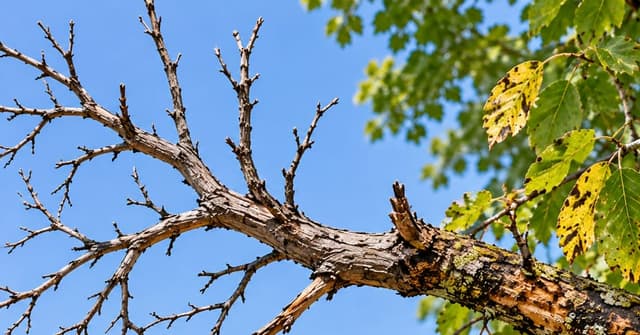
Dead branches are no longer living, showing dry wood, brittle bark, and no buds or leaves, often caused by age, storm damage, or lack of light. Diseased branches are actively infected with fungi, bacteria, or pests, exhibiting visible symptoms like discolored foliage, dark lesions, oozing sap, or fungal growths. While dead branches simply need removal to prevent physical hazards, diseased branches require immediate pruning and sanitary disposal to stop the infection from spreading to healthy parts of the tree.
A professional arborist in Birmingham, AL will check the bark, buds, and grain of the wood before recommending tree trimming and pruning or a larger removal, because the right fix depends entirely on which one you’re dealing with.
How a Dead Branch Looks and Feels
Dead branches lose their bark, or show bark that flakes off easily when you scratch it with a fingernail. Underneath, healthy wood is green and moist; dead wood is dry, brittle, and gray or tan straight through. No new buds form along a dead branch even in spring, and any leaves still attached are usually brown, curled, and left over from the previous season.
Snap a small twig from the branch and it breaks cleanly with a dry crack instead of bending. The quick scratch-and-snap test is one of the fastest ways to confirm a branch is gone for good.
Getting this right matters for more than curb appeal. A branch that’s simply dead is a straightforward removal, but treating a diseased branch the same way i.e. – a quick cut with no follow-up can leave the pathogen active in the tree and free to resurface somewhere else next season.
Signs a Branch Is Diseased, Not Dead
A diseased branch is often still producing leaves, but they may be smaller than normal, discolored, curling at the edges, or wilting earlier in the season than leaves elsewhere on the tree. Look for cankers (sunken or discolored patches on the bark) along with oozing sap, shelf-like fungal growth, or dark streaking just under the bark when a small cut is made. Because disease usually shows up in one section before it spreads, a single sickly-looking branch on an otherwise healthy tree is worth investigating rather than ignoring.
Common Culprits Behind Branch Decline in Birmingham Yards
Local growing conditions shape which problems show up most.
- Hypoxylon canker is a common issue on oaks and other hardwoods that have been stressed by drought, appearing as a dead branch with bark that later sloughs off to reveal a dark, crusty fungal mat underneath.
- Fire blight affects ornamental pears and other flowering trees, turning branch tips black as though they were scorched.
- Anthracnose thrives during Birmingham’s wet spring weather and causes blotchy, dying leaves and twig dieback on species like sycamore and dogwood.
- Pine bark beetles, meanwhile, tend to show up as a dying top section on an otherwise green pine – a pattern very different from ordinary deadwood.
Why the Difference Changes the Pruning Plan
Dead wood can usually be cut at the branch collar and removed at almost any time of year with little risk to the rest of the tree. Diseased wood is handled differently: cuts often need to go further back into clearly healthy tissue, and tools get sanitized between cuts so a pathogen isn’t carried to the next branch or the next tree on the property.
Timing matters as well, since some diseases spread more easily while a tree is actively growing, which is why late-winter dormant pruning is often the safer window. This is the core of how tree trimming and pruning service is structured. The goal isn’t just cutting off a bad branch, it’s making sure the cut doesn’t create a new problem.
How This Affects the Tree’s Long-Term Health
Removing dead wood focuses on safety and appearance. That wood is already dead, so removing it doesn’t affect internal tree function. Removing diseased wood is different. The main goal is protecting healthy, living tissue. Arborists may prune beyond the visible damage to stop the infection. They might also schedule follow-up visits to check for returning symptoms.
Properly removing diseased wood gives trees a strong chance to fully recover. Younger, vigorous trees with healthy root systems respond best to treatment.
What Happens If You Wait
A dead branch left in place gets more brittle every season, and dead limbs are one of the most common causes of storm damage – a big part of why Greener Grounds Lawn & Tree provides 24/7 emergency tree service for branches that come down without warning.
A diseased branch left in place can carry the problem into the trunk, and at that point pruning may no longer be enough to save the tree, leaving tree removal as the only safe option.
In both cases, catching the issue early is almost always less disruptive and less expensive than waiting until the problem is obvious from the driveway.
When to Call a Professional Instead of Guessing
Some cases are easy to call from the ground. Others genuinely aren’t, especially high in a mature canopy where you can’t get a close look at the bark, the buds, or the wood grain. If you’re unsure whether you’re looking at simple deadwood or an active disease, it’s worth having someone check before you start cutting or decide to ignore it.
What to Expect From a Greener Grounds Visit
Protecting your landscape begins with identifying subtle signs of branch decline before they turn into severe property hazards or irreversible tree loss. Whether you are dealing with brittle deadwood or a fast-spreading fungal infection, Greener Grounds Lawn & Tree delivers the expert diagnostic care and precision pruning required to keep your canopy healthy and resilient.
Greener Grounds Lawn & Tree’s team combines deep local horticultural knowledge with strict industry standards to handle everything from routine maintenance to complex hazard mitigation. Do not let a compromised branch jeopardize your home or the investment you have built in your trees. Contact Greener Grounds Lawn & Tree today at (205) 555-0199 or visit our office at 1234 Canopy Way, Birmingham, AL 35203 to schedule your professional tree assessment.
Frequently Asked Questions
Can a diseased branch be saved, or does it always need to be removed?
It depends on the disease and how far it has progressed. Caught early, many diseased branches can be pruned out well behind the infected area, protecting the rest of the tree. If the disease has already reached the trunk or major limbs, removing the whole tree may be the safer option.
Is it normal for one branch to die while the rest of the tree looks healthy?
Yes, and it doesn’t automatically mean the tree is in trouble. A single dead branch can result from shading, minor mechanical injury, or age, especially on larger trees. It’s still worth having it checked, since an isolated dead branch can also be the first visible sign of a disease that hasn’t spread far yet.
How can I tell if my tree has a fungal disease instead of just dead wood?
Fungal disease usually shows clues beyond dead wood alone discolored or wilting leaves elsewhere on the canopy, cankers, oozing bark, or mushroom-like growth on the trunk. The Alabama Forestry Commission offers regional guidance on identifying common tree diseases and pests found in Alabama landscapes.
Does removing a diseased branch stop the disease from spreading?
It can, if the cut is made well behind the infected wood and tools are sanitized between cuts. It isn’t guaranteed in every case, which is why a follow-up inspection is sometimes recommended after pruning a diseased tree.
Should I prune a diseased branch myself?
We’d recommend against it. Cutting in the wrong spot or using unsanitized tools can spread the disease further, and reaching branches safely often requires the right equipment. The Alabama Cooperative Extension System notes that improper pruning cuts are one of the most common ways homeowners accidentally worsen a tree health problem exactly the kind of mistake a professional visit is meant to avoid.
How often should trees be checked for dead or diseased branches?
A yearly walk-around is enough for most healthy trees, ideally in late winter or early spring when it’s easiest to spot dead wood against new growth. Mature trees near a home, or any tree that’s shown a problem before, are worth checking more closely after major storms or long dry spells, since both types of stress can trigger new branch decline.