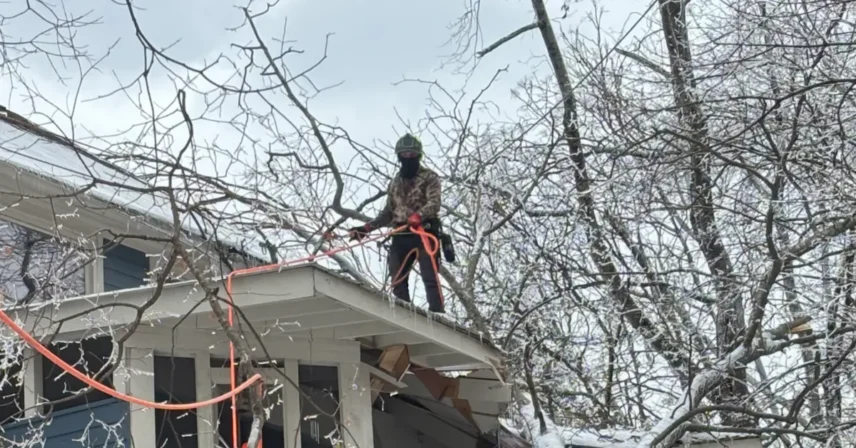
Birmingham’s tree canopy is part of what makes the city’s neighborhoods feel like home. It’s also what makes storm season stressful for property owners. Heavy summer thunderstorms, spring tornadoes, and ice storms are all part of life here, and when a tree comes down, the question of who pays for removal comes up fast.
The answer depends on a few key factors: what the tree hit, what caused it to fall, and what your specific policy says. Understanding those factors before you need to file a claim can save you a significant amount of money and frustration.
Insurance Pays After Damage Occurs, Not Before
Homeowners insurance is reactive. It responds to losses that have already happened. That one principle explains most of the confusion people have about tree removal coverage.
If a tree falls and hits a covered structure, your house, a detached garage, or a fence, your policy will generally pay to remove the tree so repairs can begin. The removal is tied to the property damage, not to the tree itself.
If a tree falls in the middle of your yard and doesn’t hit anything, you’re on your own. From the insurer’s perspective, there’s no property loss. Cleanup is a maintenance expense.
What Caused the Tree to Fall Matters
Most standard homeowners policies cover specific events called named perils, which include windstorms, lightning, and hail. In Alabama, those are common enough that most weather-related tree claims have a clear path to coverage.
Where things get complicated is when the tree fails for other reasons. If a healthy tree gets uprooted during a storm, that’s generally covered. If a tree comes down on a calm day because it was rotted through or diseased, an adjuster is likely to flag it as a maintenance issue and deny the claim.
Pine beetles and wood rot are especially prevalent in the Birmingham area. If an adjuster can show the tree was compromised long before any storm, it gives the insurer grounds to push back.
Proactive Removal Is Almost Never Covered
You can see a tree leaning toward your roof, it looks dangerous, and you want it gone. Your insurance company still won’t pay for it.
That’s not a loophole. It’s how policies are written. Removing a hazardous tree before it causes damage is considered routine property upkeep, the same as fixing a leaky roof or replacing a rotted deck board. The cost falls on the homeowner.
This is one reason proactive tree maintenance pays off beyond just safety. If a maintained tree eventually fails during a storm, you have documentation showing you acted responsibly, which makes it harder for an adjuster to claim negligence.
When Your Neighbor’s Tree Falls on Your House
If your neighbor’s tree falls on your house during a storm, you generally file the claim with your own insurance company. Alabama law, like most states, treats storms as acts of God. The fact that the tree came from someone else’s property doesn’t automatically make them liable.
There is one exception. If the tree was visibly dead or diseased and you notified your neighbor in writing before it fell, your insurer may have grounds to pursue their insurance company. That written notice matters. Verbal warnings don’t carry the same weight with adjusters or in court.
The reverse applies too. If your tree falls on a neighbor’s house during a storm, their insurance typically handles it. But if they can show you knew the tree was a hazard and did nothing, your liability coverage could be brought into the picture.
What the Policy Actually Pays
Even when a claim is valid, there are financial limits on tree removal specifically.
Most policies include a debris removal cap, often between $500 and $1,000 per tree. That number gets consumed quickly when you factor in the labor and equipment required to extract a tree from a structure. There’s usually a per-event cap as well. If multiple trees came down in the same storm, you may hit that ceiling fast and cover the remaining cleanup out of pocket.
Deductibles are worth calculating before you file. Many Alabama policies now carry separate wind and hail deductibles based on a percentage of the home’s insured value rather than a flat dollar amount. If your home is insured for $300,000 with a 1% wind deductible, you’re responsible for the first $3,000 of any wind-related loss. If the total damage only adds up to $1,500, filing a claim costs you more than it gets you, and it still goes on your claims history.
Run the numbers first and talk to your agent before officially opening a claim.
Document Everything Before Work Starts
If you have a valid claim, documentation is your strongest asset. Before any debris is moved, unless there’s an immediate safety hazard, photograph the scene thoroughly. Wide shots showing the full scope of damage, close-ups of where the tree made contact, and photos of the trunk and root ball all help support the claim.
When you get estimates from tree services, ask for itemized quotes that separate extraction from debris hauling. Insurers are more likely to cover extraction in full because removing the tree from the structure is necessary to begin repairs, which your policy typically requires you to do promptly. Debris removal is where the caps kick in.
Records of past tree maintenance also help. Invoices from a certified arborist show you’ve been attentive to your property, and they make negligence claims from an adjuster harder to sustain.
Key Takeaways
Coverage depends on what the tree hit, what caused it to fall, and what your policy says about deductibles and debris limits. Insurance will help after a tree causes damage, but it won’t pay to prevent damage from a tree that’s still standing.
If you have trees that concern you, have them evaluated by a certified arborist now. Address problems while they’re manageable, keep records of the work, and talk to your insurance agent about your specific coverage before you need to rely on it.
When a storm does bring a tree down, having a trusted local crew ready to respond makes all the difference. Greener Grounds provides professional tree service in Birmingham, AL and can guide you through the removal process from the first call to the final cleanup, helping you document the damage, coordinate with your insurer, and get your property back in order fast.